In 2024 I spent three weeks on my first ever Blender project: a Cybertruck rolling out of a bunker on Mars. Modelling, texturing, animating, all by hand and all new to me. The original is still here. I was proud of it back then. Looking at it now, it's kind of wack.
So I gave it to Opus 5.5 with one message: "couple of years ago i made this blender render and its kinda wack now. keep the story, the bunker, the domes, starship on the horizon, but rebuild everything else. the models, the scene, the animation!! it shouldnt feel like a 3d render, it should feel like a film someone actually shot on mars. heavy, quiet, a bit of dust in the air. this is not a short task, loop until you make something awards worthy".
Everything is code
It started by reading my old renders, the styleboard and the sketch sheet, and kept the story: nine shots, the bunker, the greenhouse domes, the solar field, the door, the drive-out, Starship on the horizon. Then it rebuilt all of it without once opening Blender's interface. The truck is cut from planes and checked against the side view in Tesla's owner's manual. The terrain is a heightfield, the rocks are scans scattered with geometry nodes, and the domes are geodesic glasshouses with lettuce growing in the racks. Even the soundtrack is synthesised in Python.
That's the part that gets me. Nothing in this film was placed by hand. Around 60 scripts rebuild the whole scene from source, so any shot can be changed and rendered again.
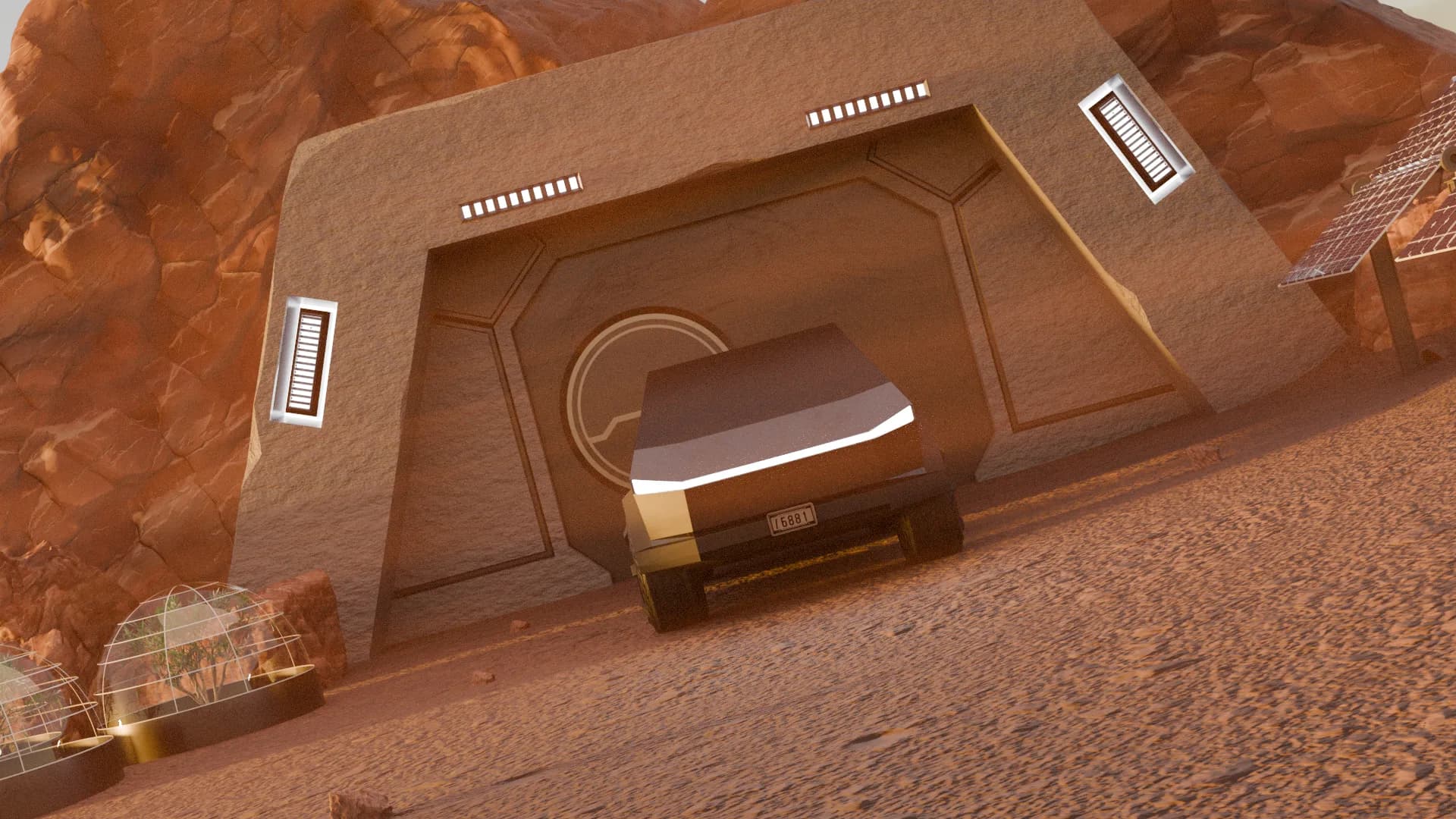
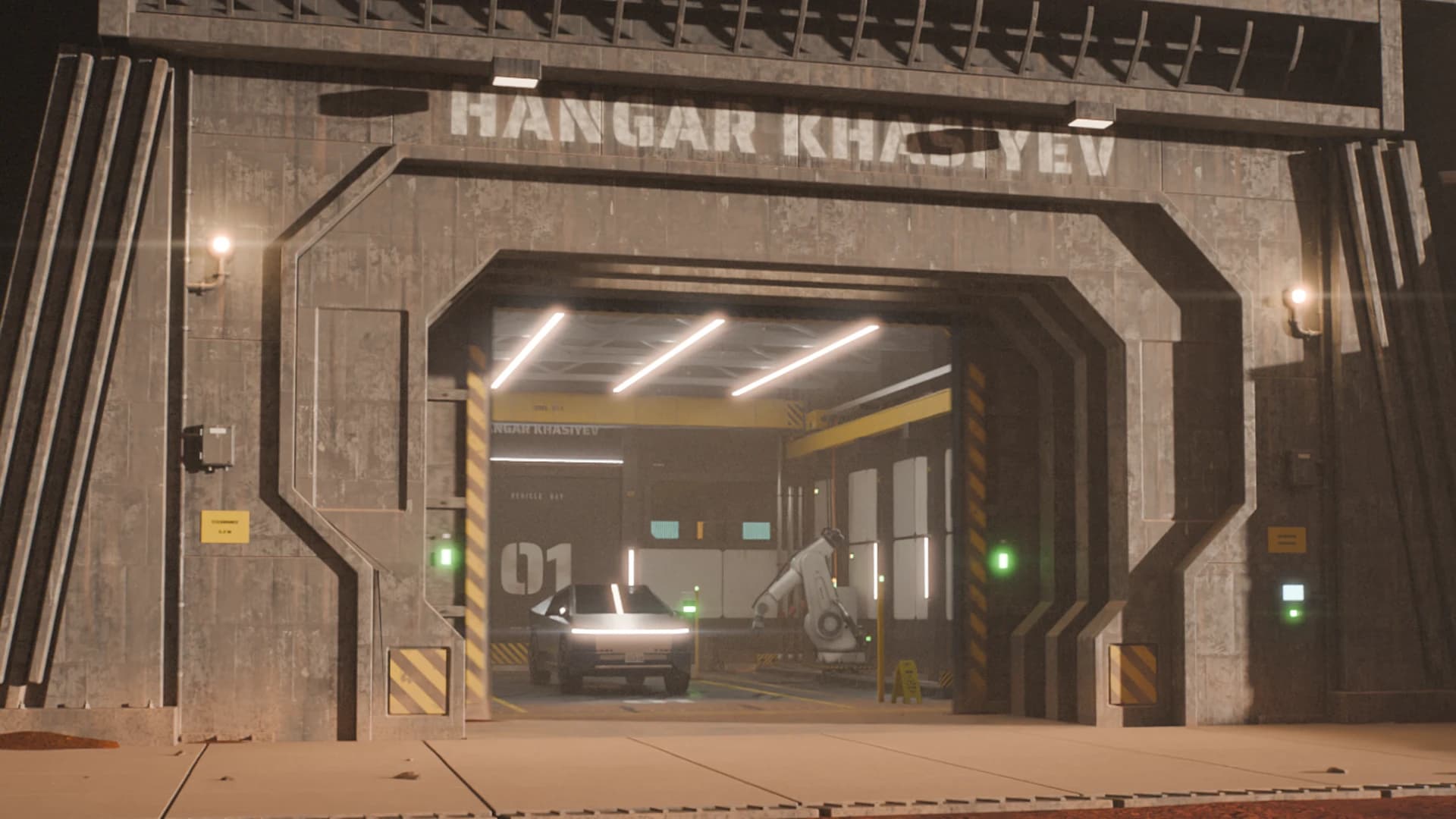
Where I steered
I didn't write any code, but I didn't sit back either. My part turned into art direction. "the wheels look like plastic. rubber is matte and dusty, only the rims should catch the light." "the dust looks fake, real dust hangs low and trails behind the wheels, and the sun should come through it." "the animation is stiff. something this heavy should settle into its suspension when it stops, nothing moves at a perfectly even speed." Every note went back into the loop, and the next pass came back better.
On the first day up to six sessions ran side by side: one on the truck, one on the wheels, one on the capsules, one on the hangar interior, one on the bunker gate and one stitching it all together.
Post-processing
For the finish I switched to goal mode, where you set a goal and the agent keeps looping until it's met. Those passes ran on Fable 5.1, with goals like "make it look shot, not rendered. think anamorphic sci-fi like dune and interstellar: deep blacks, the sun blooming a little too much, grain you feel more than you see". Instead of Blender's compositor it wrote its own finishing chain in Python, in the order a camera, a lab and a colourist would apply it: per-shot exposure and white balance, a graduated ND on the sky, lens glare, anamorphic streaks, red halation around the light bar, a log grade with a split tone, then grain. Drag to compare the raw render with the delivered frame.
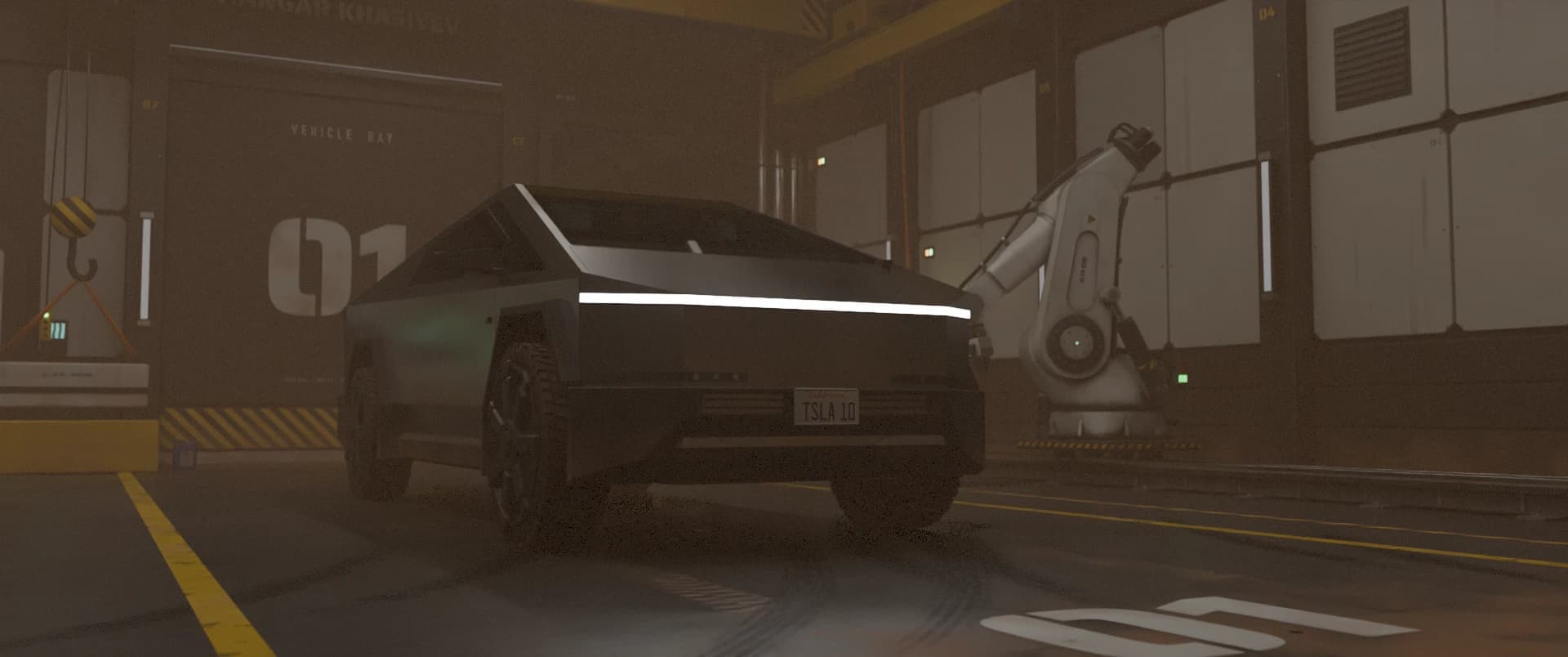
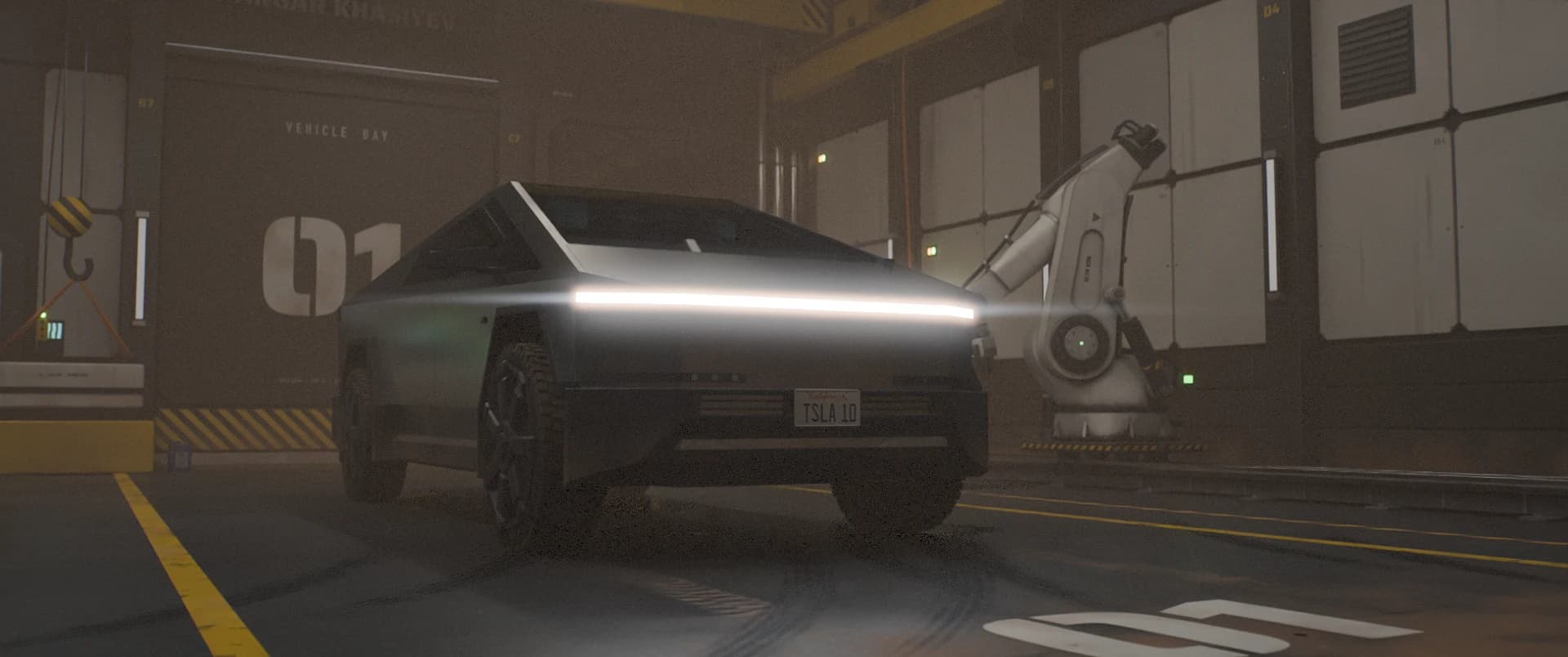
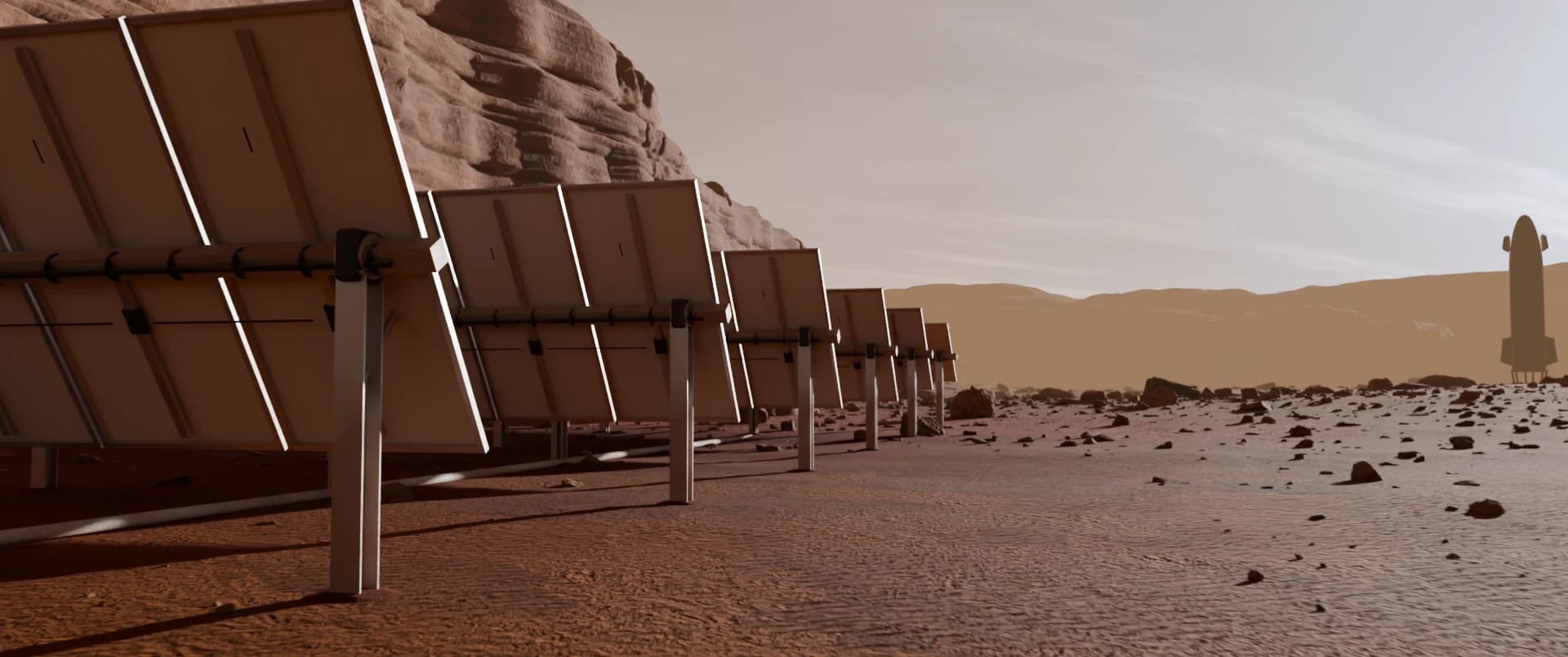
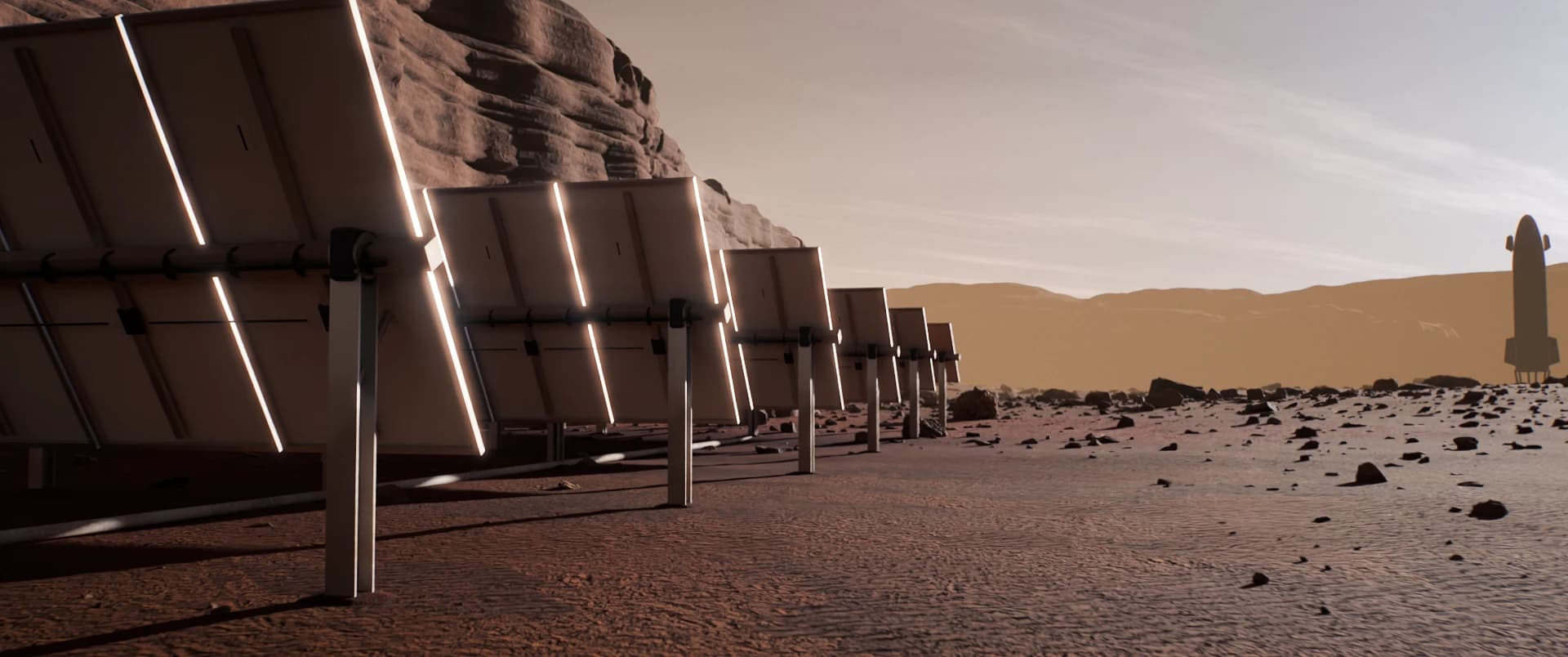
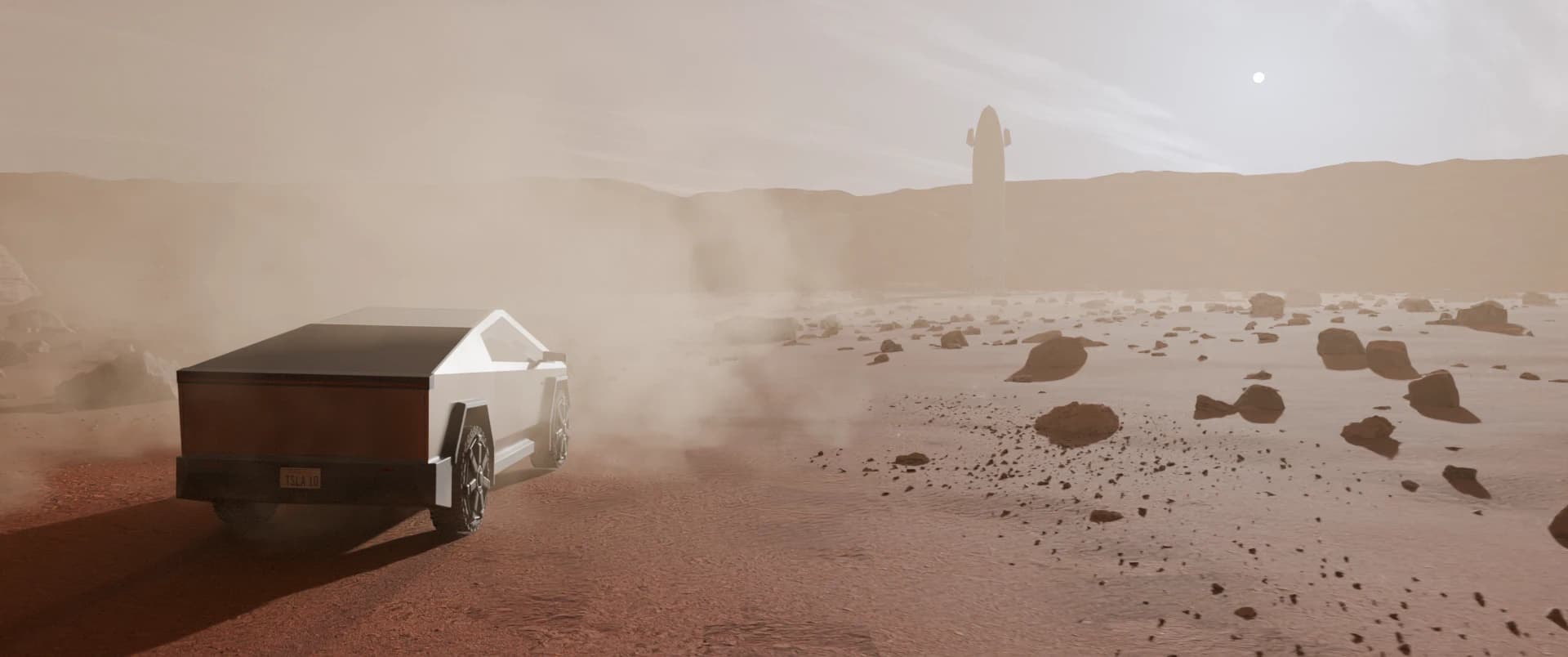
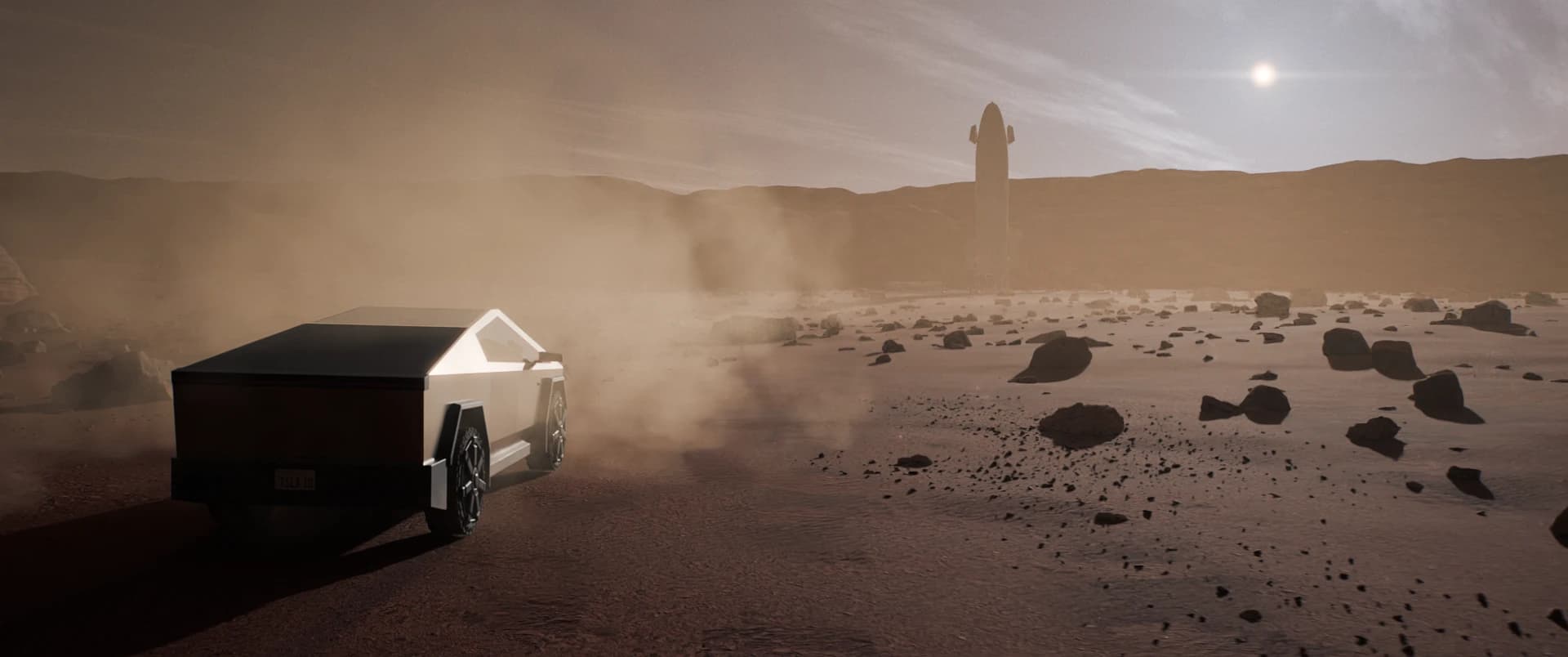
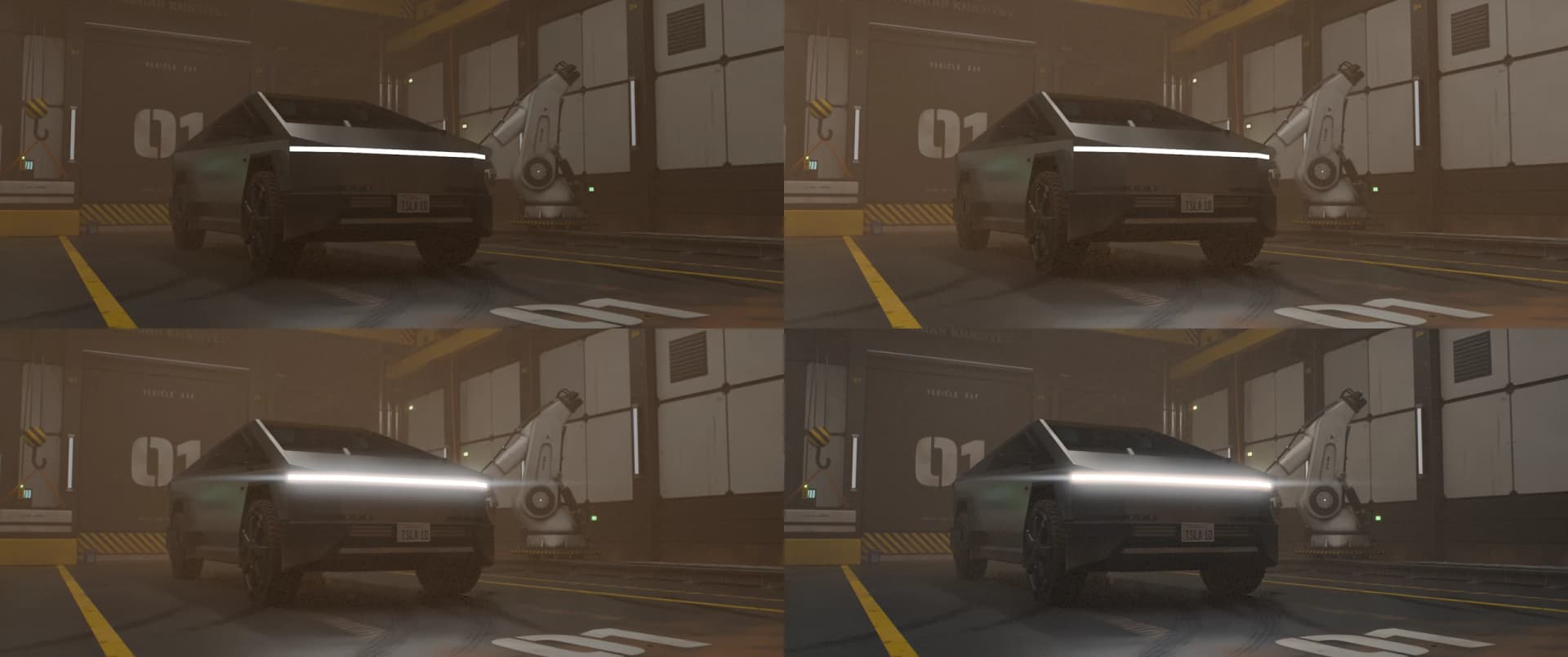
The same frame through the chain: raw render, then exposure and white balance, then lens and halation, then the print grade and grain.
Behind the scenes
The whole film was made headless: no window, just scripts driving Blender from the terminal. Open the files in Blender afterwards and the scene is all there, with real node trees, real materials and all nine shot cameras on the timeline.
The dust was the hardest part. The first version was 36 overlapping puffs that looked fake and took 40 of the 60 seconds each frame needed to render. It got replaced by a single volume, which looks better and renders faster.
- About 46 hours from my first message to the final film
- Around 2,100 tool calls, 27 messages from me
- 60 Python scripts, close to 19,000 lines
- 815 frames at 2.39:1, rendered on an M4 Max in about a day, with the final crane shot alone taking eight hours
- Score and sound design synthesised from scratch, no samples
- Scanned textures, rocks and skies from Poly Haven (CC0)
Three weeks in 2024, two days in 2026. I wrote down what that does to my view on AI.